


1854/80 Ducroquet/Cavaillé-Coll Organ
St. Sauveur Cathedral, Aix-en-Provence/Provence, France
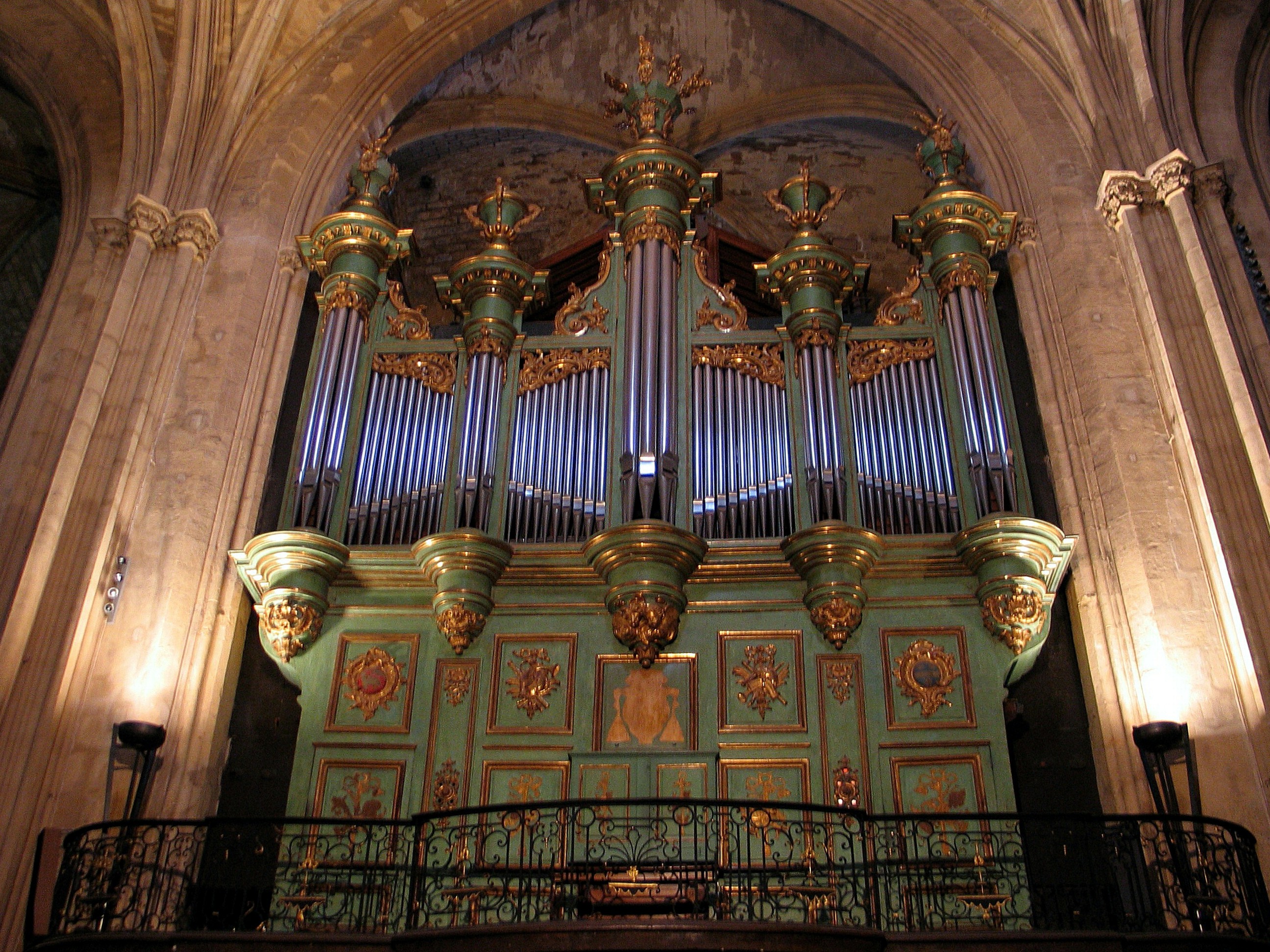
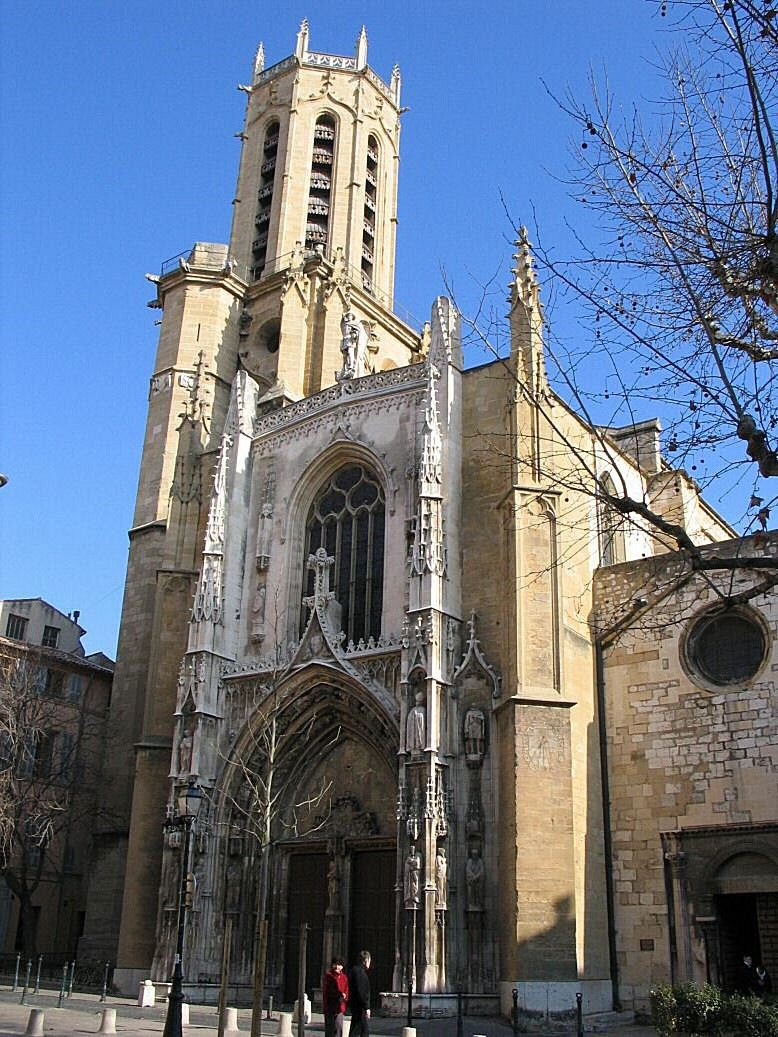
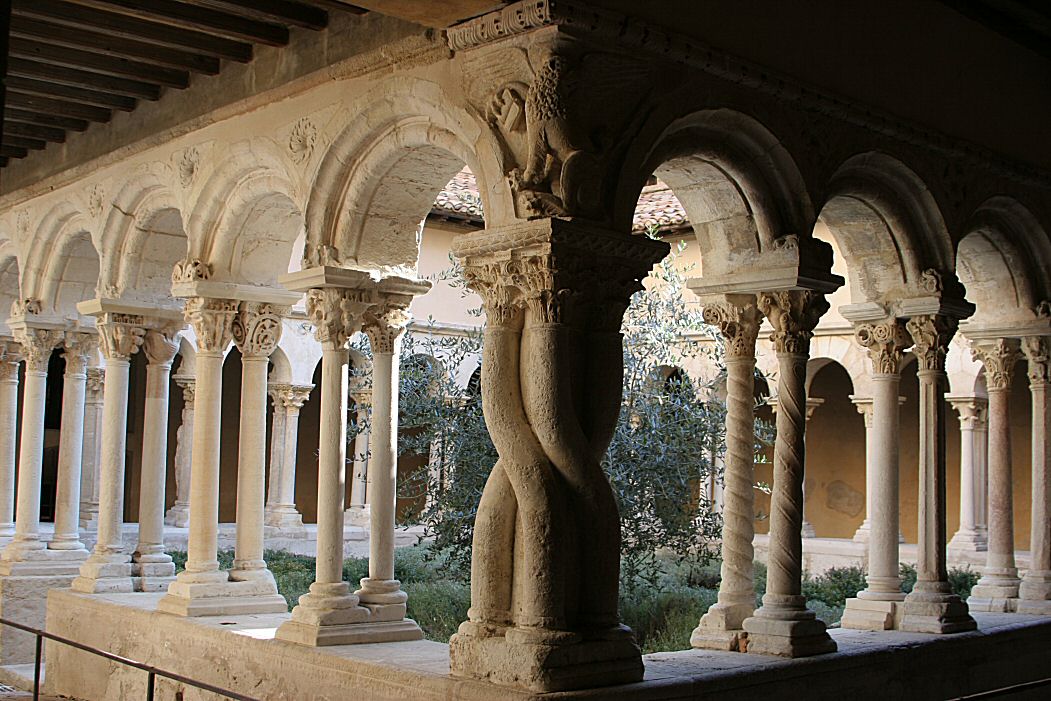
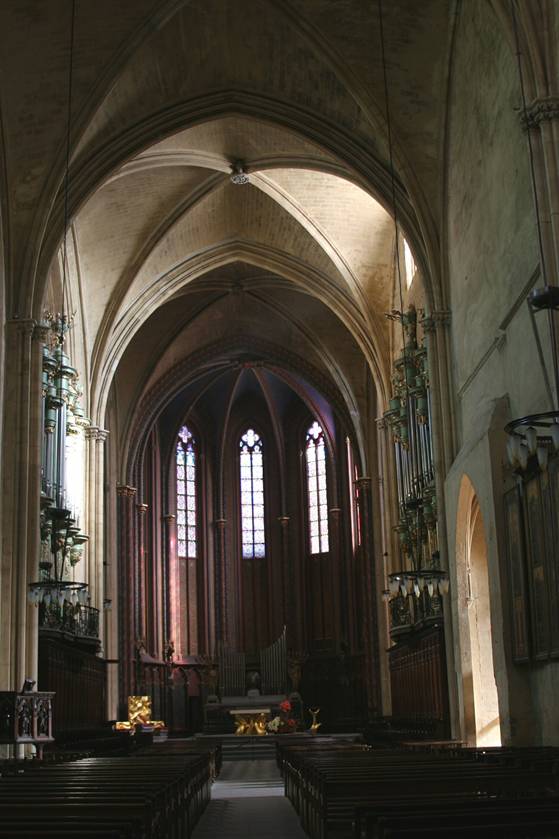
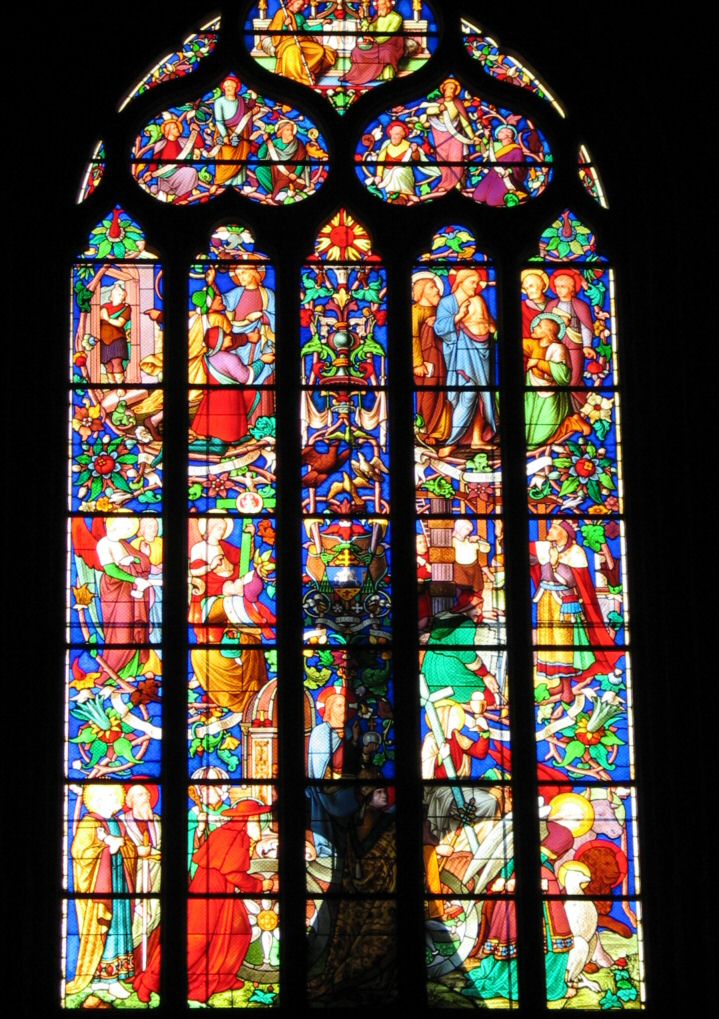
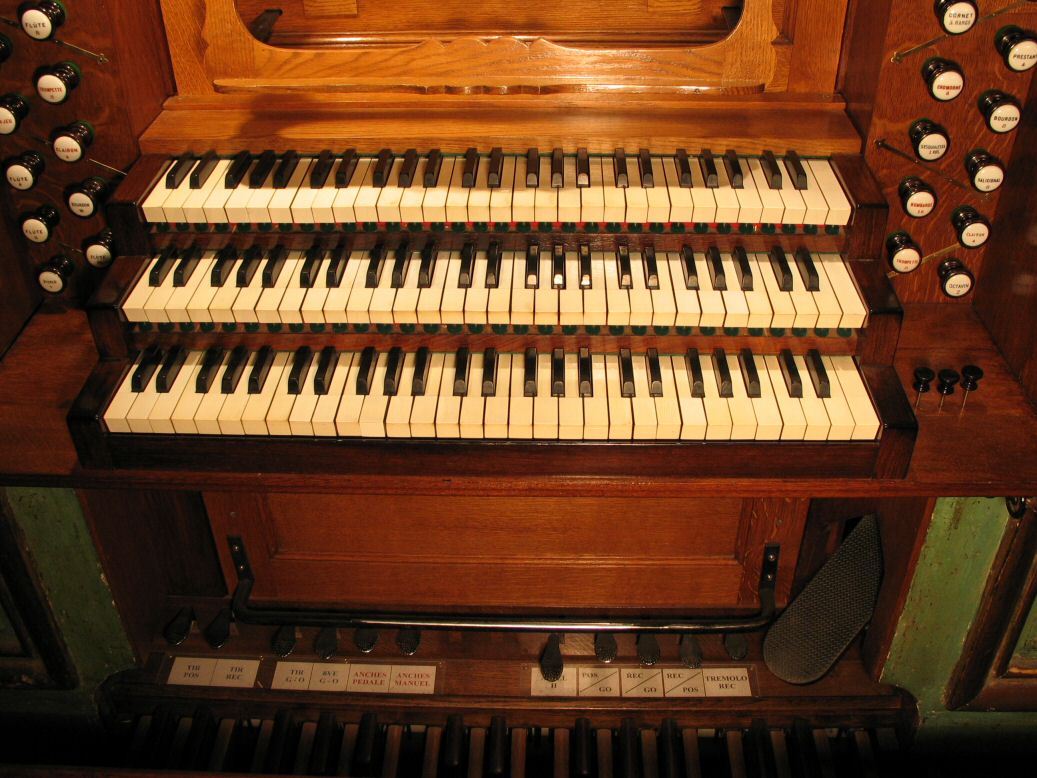
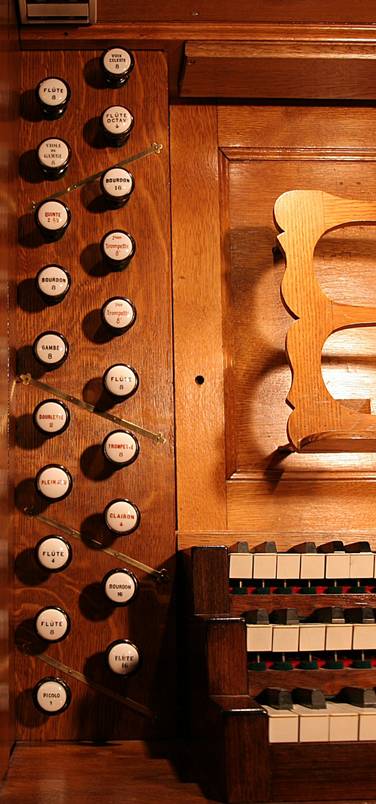
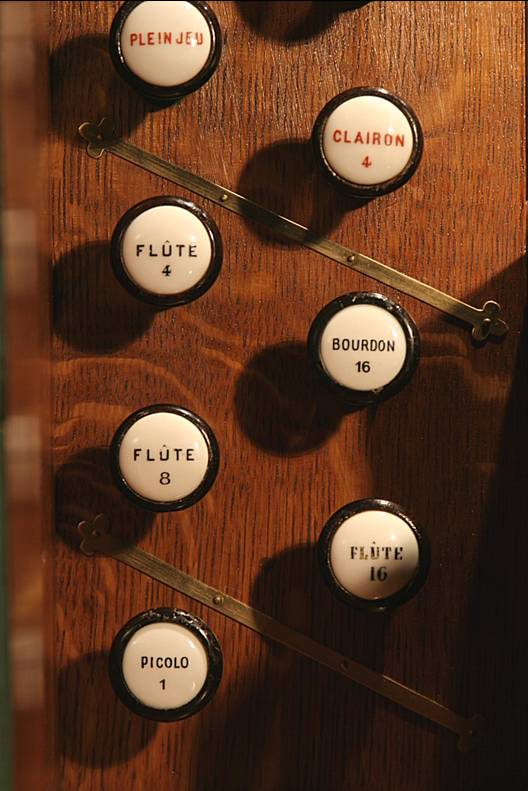
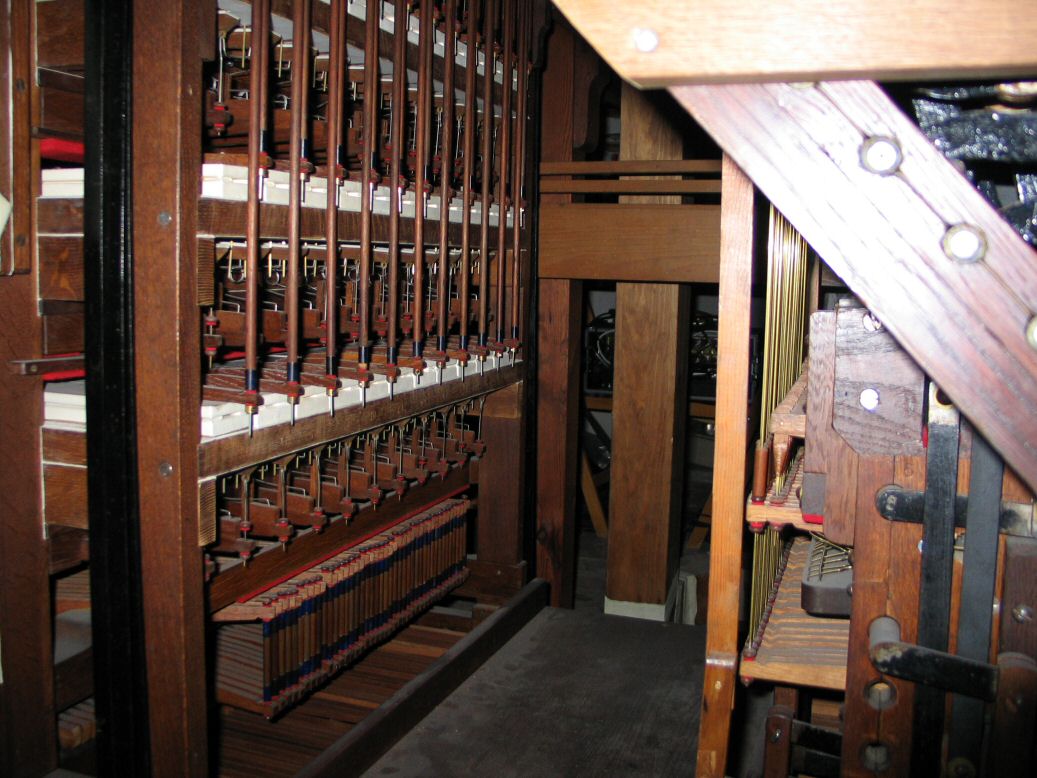


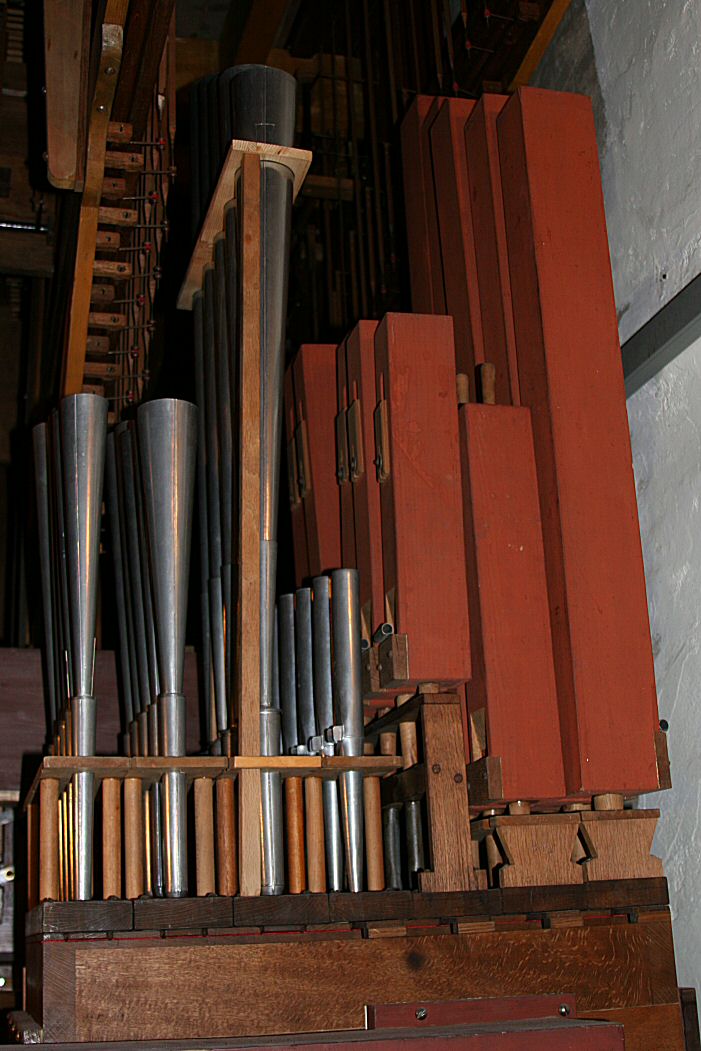
(Classified historic monument: 18th century organ case and instrument)
Short Introduction and History
The organ was built in 1854 by Alexandre Ducroquet, successor of the firm Daublaine et Callinet in Paris. Ducroquet built the new organ on the Gospel side in the genuine former chest, constructed by Isnard, the famous organ builder of St. Maximin . Cavaillé-Coll did tonal adaptions and restorations in 1880, added/replaced some stops.
The pedal compass was enlarged by Merklin 1915, who also replaced some stops. The restoration committee of 1972 had the difficult task to decide, to which organ they should go back, the original Ducroquet or Ducroquet-Cavaillé-Coll? They decided for the excellent 1880 Cavaillé-Coll state.
The big restoration and reconstruction by organ builder J. Dunand started in 1973. The inauguration concert took place on March, 19, 1975, performed by Marie-Madeleine DURUFLE and Maurice GAY. The last restoration took place in 2002. Titular organist has been Chantal de Zeeuw since 1979.
The Ducroquet-Cavaillé-Coll is a transitional romantic-symphonic instrument of very high quality and therefore was classified as a historical monument. Due to the Cromorne, the Sesquialtera and the brilliant Fourniture and Plein Jeu, which are normally not existing or have a darker colour within Cavaillé-Coll organs, one is able to play the complete (French) organ repertoire, beginning from late baroque up to modern pieces.
The church room has a rich wet acoustics with about 6,5 seconds of reverberation.
See Location in Googlemaps
Recording technique
The instrument was originally recorded in February 2005 by using 24-bit high-end multi-channel technology, first published for Hauptwerk V1/V2 and has now been completely revised in February 2026 for Hauptwerk V7 with multi-layer samples for all ranks, multiple loops, improved acoustical balance etc.t. The stops were recorded with multiple release levels for short and long key attacks.
Thanks
Special thanks are due to Titulaire Chantal de Zeeuw for the warm welcome and support.
Last but not least, thanks to my wife, who assists all projects and is responsible for the photo documentation.
Virtual Console

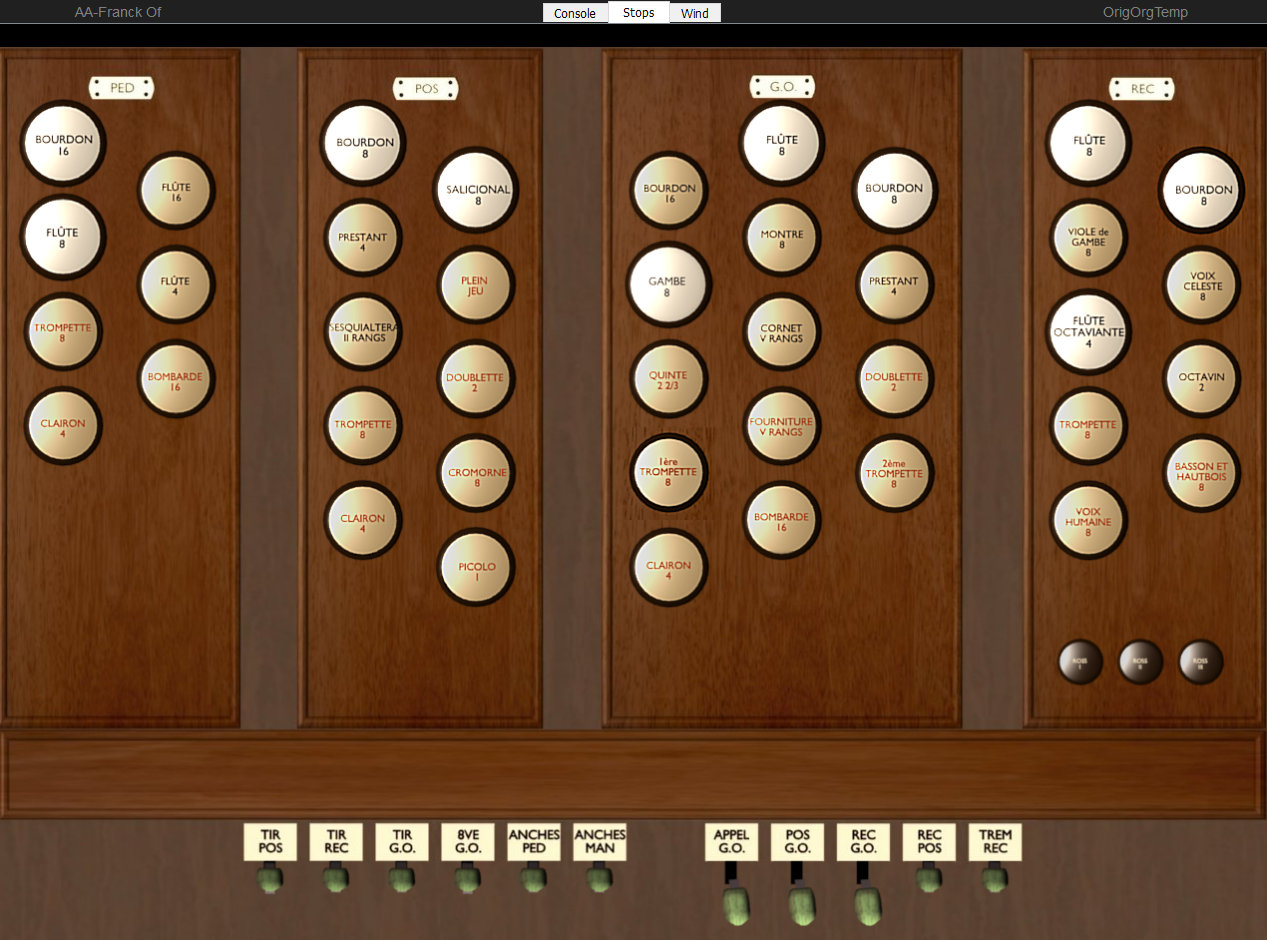
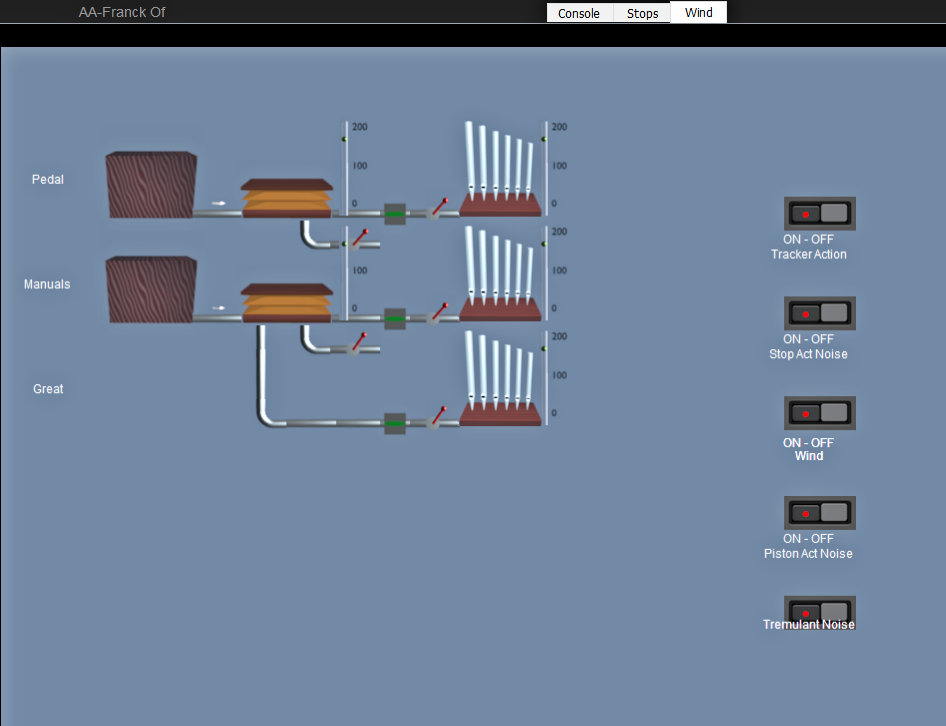
Specification
Positif (C–f3)*Laye des Fonds Grand Orgue (C–f3)*Laye des Fonds |
Récit expressif (C–f3)*Laye des Fonds Pedal (C–f1)Laye des Fonds |
CommoditésAccouplements (Couplers) Tirasses (Pedal Couplers) Appeles (Activate Anches Layer) Rossignol I, II, III NOTE: |
Requirements
Loaded Version |
Memory Requirements 3) |
Processor Speed 2) |
|
16-bit, compressed1) |
4600 MB |
≥ 2 GHz DualCore 2) |
| 24-bit, compressed1) | 8600 MB | ≥ 2 GHz DualCore 2) |
1) Lossless compression (no loss of sound quality!)
2) Recommended: Minimal configuration: Dual-Core, 8 GByte RAM, Optimal configuration: Quad-Core, 16 GByte RAM
3) To load this organ into Hauptwerk you will need enough free memory in your computer, due to the amount of playable stops, not including the operating system or any other programs that may be running!
We recommend a professional audio card (e.g. RME-Series) and a studio headphone (e.g. AKG Reference Headphone K701, K712) for optimal sound and room impression.
Demos
The following demo pieces were recorded with the Hauptwerk Advanced Edition software and the organ sample set, with no additional effects processing.
PRELIMINARY DEMOS NEW EDITION
Demos are available on Concert Hall-Website (check Ducroquet-Cavaillé-Coll NEW EDITION)
________________________________________________________________________________________________________________
OLD VERSION
Live performance by Andreas Mattes, Germany:
Charles-Marie Widor (1844-1937):
|
Symphony No. 6. Op. 42/2 Finale
C. Franck (1822-1890): |
C. Franck (1822-1890)
Cantabilé | 5:38 min
Piéce Hèroique | 8:85 min
E. Gigout (1844-1925)
Toccata | 3:21 min
Louis Vierne (1870-1937)
Stèle pour un enfant défunt (from Triptique op.58) | 4:59 min
Organ Symphony No. 1 op. 14:
Prélude | 8:28 min,
Fugue | 4:53 min
Pastorale | 7:35 min
Allegro vivace | 4:50
Andante | 7:31 min
Final | 6:28 min
Live perfomance by Lorenzo Bonoldi, Milano:
Marco Enrico Bossi (1861-1925):
Thème et Variations C#m op.115 (1899) 11:50 min | Stop List
Live performances by Randall Mullin, USA
Vierne, Widor
Numerous other live recordings can be found on the ConcertHall Website
(Advanced Search, Organ: OAM - Ducroquet-Cavaillé-Coll)
© OrganArt Media, all rights reserved
No demo sounds may be used or transmitted in any form for public purposes without the prior written permission of the publisher!
Informations, Discography and Weblinks